
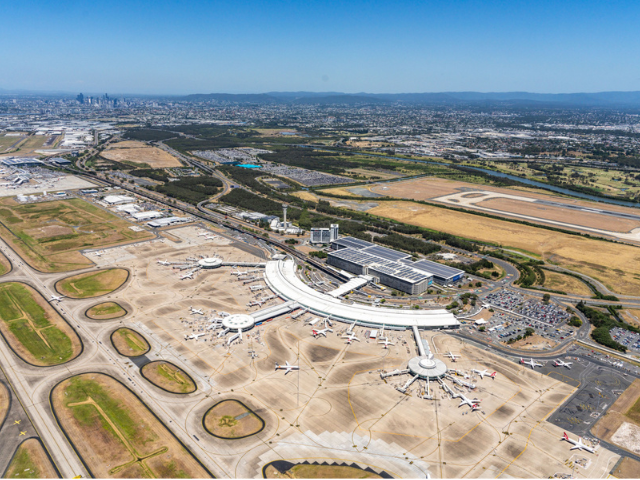
The five-year blueprint, Brisbane Airport’s 2026 Master Plan, includes progressing plans for Terminal 3, which is slated for between the two main runways. The vision for the airport was drafted last year by the Brisbane Airport Corporation (BAC) after forecasts passenger numbers would double in the next 20 years. It dovetails with the lead-up to the 2032 Olympics and Paralympic Games, and is intended to support the growth in traveller numbers due to the events.
According to the airport, its Master Plan outline shows it will “evolve its land use” to deliver more terminal capacity as well as hotels, retail, commercial, and entertainment spaces.
“It also plans for better transport access to handle a significant increase in passenger numbers, with capacity to handle more than 50 million passengers in two decades as the population of Brisbane and Queensland continues to grow,” the airport said in a statement.
Terminal 3 is planned to total 26,000sq m and include aviation services, short-term accommodation, offices, shops, and food and drink outlets. It would handle domestic and international passengers under one roof, and be incrementally expanded in stages through to 2046.
Terminal 3 would be completed in stages from the mid-2030s, with key components including passenger gates, connections to Terminal 2 and a hotel development.
The masterplan was approved by Minister for Infrastructure, Transport, Regional Development and Local Government Catherine King this week. “This plan outlines how the airport precinct will develop over the next 20 years, ensuring ongoing capacity, connectivity and sustainability of one of our busiest aviation hubs."
The Master Plan also considers future technologies, including sustainable aviation fuels and emerging hydrogen and electric aircraft, as part of a shift to cleaner energy and more sustainable operations.
Brisbane Airport Chief Executive Gert-Jan de Graaff said, “When a city grows, the airport must plan for that growth. This plan will ensure Brisbane Airport remains a world-class gateway, as we invest more than $5 billion, just in the next five years.”
By 2032, 34.8 million passengers are expected through the airport and 52.3 million international and domestic passengers by 2046, compared to the current 25.7 million.