
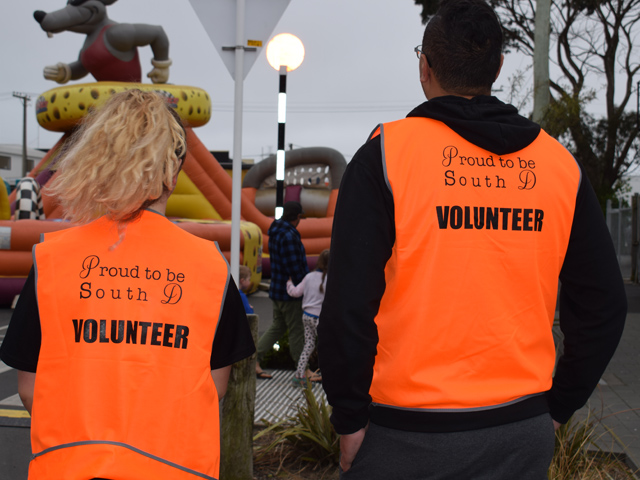
WORDS DR TRUDIE WALTERS, DEPARTMENT OF TOURISM, UNIVERSITY OF OTAGO
In spite of event organisers’ best intentions, events and festivals have the capacity to contribute to the marginalisation of underprivileged groups and communities. This often happens through exclusion (by creating a physically or financially inaccessible event) or by highlighting their ‘lack’. However, recent research on an event held for a marginalised community in South Dunedin, New Zealand, found that, with careful planning and execution, events can provide significant social value.
The South Dunedin Street Festival is an event held in a marginalised suburb with a population of just under 2500. South Dunedin is a low socio-economic suburb with high rates of unemployment, disability, sole parents and elderly residents, coupled with low levels of educational achievement, access to internet and mobile phones, and low home and car ownership. Local government is seen as having neglected the infrastructure needs of this community over the years, and a significant flood in the area in 2015 didn’t help this perception.
The South Dunedin Street Festival was first held in 2011 and has been held every year but one since then. It is promoted as “a celebration of all things South Dunedin; all the fantastic variety and diversity of cultures, community groups, families and striking individuals that make up this special part of town. The Festival aims to both build a stronger sense of community, and to showcase the amazing resilience that’s already here, at times almost hidden…”. But does that really happen? How do organisers work toward these goals through their decision-making and planning processes? How do participants feel about the Festival, and what is its value to them and the community?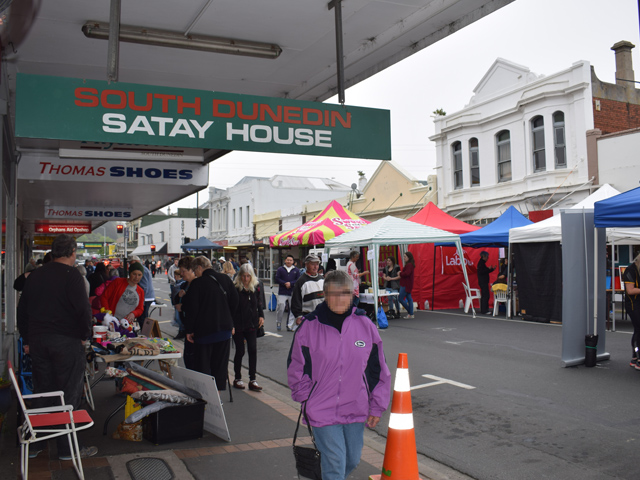
To find the answers to these questions, interviews were carried out with some of the organising committee, and conversations were had with attendees on the day. Collectively, the organisers and attendees felt that the Festival was valuable for a number of reasons: 1. it is good for the community; 2. it gets people out; and 3. it showcases the diversity in the community.
The South Dunedin Street Festival was seen as good for the community in three ways. First, it showcased local community groups, activities and service organisations. Attendees appreciated seeing the wide range of local activities and services in the area that were available to them for leisure and support. These included social services such as Presbyterian Support and the Blind Foundation, and local hobby clubs and church groups. The Street Festival also resulted in networking between smaller activity and support groups that wouldn’t ordinarily happen due to a shortage of time and resources.
The second way in which the Festival was good for the community was through the celebration of all things South Dunedin. This in turn helped to generate or increase a sense of pride among local residents. Finally, the Festival was an enjoyable and accessible event designed especially for South Dunedin residents.
“I think it’s really good that there are events in South Dunedin that are accessible and affordable. South Dunedin people have a low ownership of motor vehicles for instance, so they rely on public transport a bit more, or mobility scooters and various other ways of getting round the place. Getting to the other end of town doesn’t come easy for everybody. So things happening that are good, enjoyable, local, I think that’s worth doing, that’s the main reason to do it, some affordable fun.” Event Organiser.
There are few community events aimed at those on low incomes or with limited mobility living in South Dunedin, and organisers believed the Street Festival was valued for its ability to get people out and bring them together. This theme came across very strongly in the conversations with attendees. It was clear that meeting others at the event was a catalyst for enjoyable, meaningful and necessary social interaction:
“It’s important to me, it’s a day out. I get to talk to people, get to know my neighbours. I see people I’ve known since they were children. That’s really special, that’s a South D thing.”
“Great way for people to mix and mingle. We’ve already met the other grandma! It’s the spirit, the community spirit.”
“It’s good, gets you out of the house, I’m in a council flat, you know... You get to see lots of people you know, have a catch up.”
Even without these comments, this theme was easy to see at the Festival. People were seen laughing and hugging, remarking on how long it had been since they had caught up with each other, passing on news of friends and family, and boasting about their child, grandchild or great-grandchild performing in the cultural event.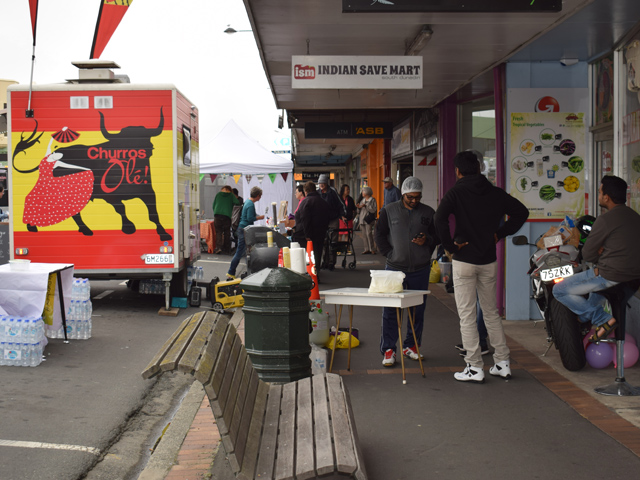
The organising committee deliberately sought to make the South Dunedin Street Festival an inclusive event that represented the diversity of its residents and their interests. School cultural groups and ethnic minority groups were invited to give performances, groups from various genres of music and dance gave demonstrations, and a tremendous range of organisations from within the community showcased their products, causes and activities – from religious groups to a cannabis museum.
As a result of the care taken by the event organisers, the attendees not only reflected this diversity but more importantly they appreciated it and commented on it:
“[I like that there is] people from all different walks of life.”
“I like to see the different groups performing.”
As a result of this intentional decision-making, the event allowed South Dunedin residents to celebrate the uniqueness of the suburb and focus attention on themselves. The Festival created a sense of pride and empowerment, and helped lessen the stigma associated with the suburb. Older attendees in particular appreciated having an event to look forward to and a reason to leave the house, which in turn contributed to their quality of life. The event created a space and time to enjoy the company of others and the diversity of the community – both in terms of the people and the displays/activities on offer. For these reasons, the event organisers can say with confidence that they have met their mandate of contributing to community celebration, pride, cohesiveness and wellbeing.
Perhaps most significantly, this research found that if events in/for marginalised communities are to be successful, a sympathetic and intentional approach needs to be taken to the organisation and planning. Such events need to be inwardly focused, authentic and relatable, and sensitive to the needs of the community. It is crucial that the community is not alienated, nor attention drawn to their marginalised status, by attracting or catering to outsiders from different socio-economic groups. If these key learnings are applied, these events may have meaningful social value for the community at its heart, leading to ongoing benefits for community members’ wellbeing and quality of life.