
Leaf drop begins when the abscission layer, formed between the leaf petiole and the stem is broken, due to a change in the existence of a plant hormone called auxin between the trunk and the leaf, allowing the leaf to break off. This process starts in autumn. However, before they shed, nitrogen and carbon is removed from the foliage by the tree and stored as protein. It is this protein that assists the development of new foliage and/or flowers in spring.
The take-out here is that while deciduous trees are bare in winter, they are structurally beautiful and full of promise, signalling the beginning of a renewal process.
At Speciality Trees a significant block of potting takes place when limbs are bare.
As growers, winter is the perfect time to formative prune to promote a robust and balanced framework for continued growth. For the buyer, this structure is exposed to the world so it is the perfect time to appreciate what you are buying. To the landscaper, planting deciduous trees in winter dormancy is a low-risk thing to do.
While it seems a difficult task to sell trees that look like sticks, these trees are loaded with potential and promise of beautiful things to come. The very first sign of warmth will generate a pattern of continual colour change making them the most entertaining and visually stimulating range on offer.
To the buyer and landscaper, deciduous stock with interesting bark make fabulous winter features. Here are four of the best naked specimens for use as winter features.
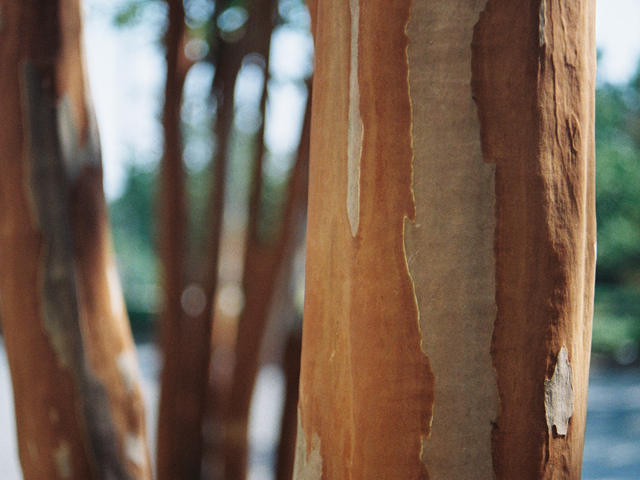
The beautiful trunk patterns of Lagerstroemia (Crepe Myrtle)
The bark of Lagerstroemia ‘Natchez’ provides colour as the tree matures, with its flakiness revealing a rich, brown under bark making this species a great all-rounder. Abundant flowering, autumnal foliage colour and interesting bark make this species an outstanding landscape favourite.
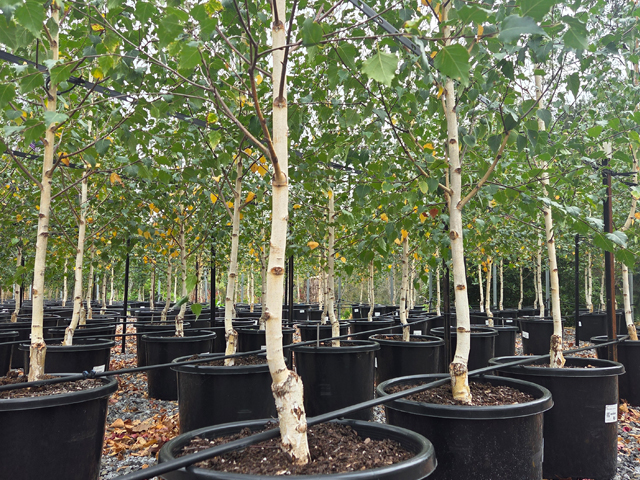
The white trunk of the ‘Moss White’ Silver Birch
The trunk of ‘Moss White’ Silver Birch is a grey colour when young that gradually turns to white. It is a pretty tree most of the year with delicate bright green foliage and long hanging pale green catkins but its standout season has to be winter when its textured white trunks are fully exposed. Uplit with spotlights, they make a fabulous winter feature.
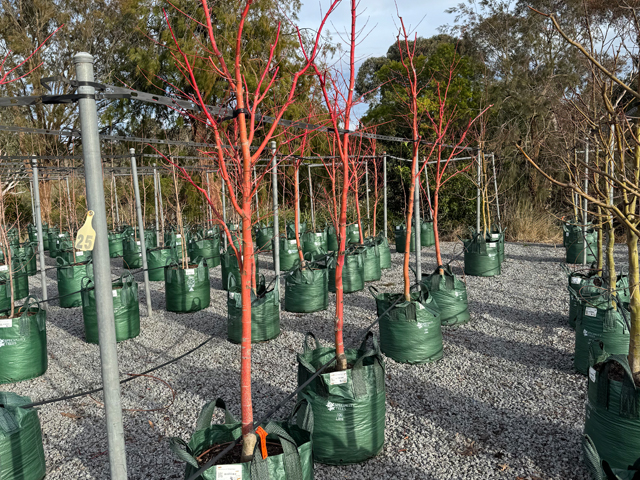
The vibrant Acer palmatum ‘Sango Kaku’
Acer palmatum ‘Sango Kaku’ is a known for its unique red trunk and attractive double serrated leaves. Foliage is green during spring turning bright yellow with an orange tinge in autumn. But when leaves have fallen, their already red bark, seems to turn even brighter making it a knockout feature tree in winter.
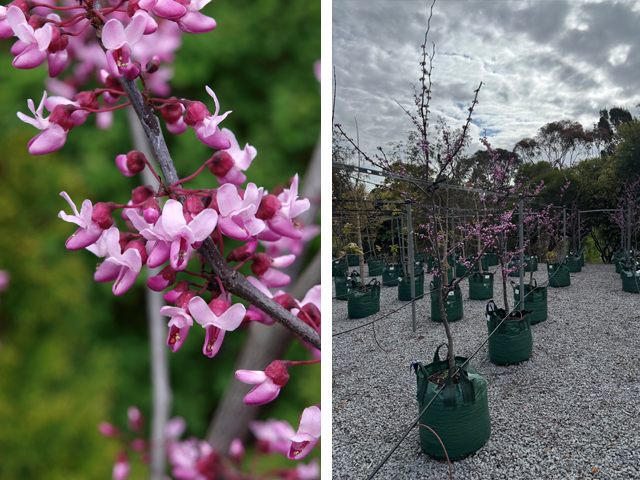
The flowering Cercis canadensis ‘Forest Pansy’
Cercis canadensis ‘Forest Pansy’ is another all-rounder given its winter branch colour. After a multi-coloured foliage display in autumn, smooth dark brown branches beautifully transform with late winter pink blossom. These small pea-like flowers tightly hug the branches resulting in a stunning specimen at a time when not much else is in colour.
Who said Winter landscapes are boring. Including one or more deciduous trees with showy ornamental bark in your garden ensures your landscape has year-round interest. Bark is an asset, so think about what you plant with them and consider a backdrop of evergreen to maximise their beauty.
For more selections and tree advice, visit Speciality Trees via the links below