
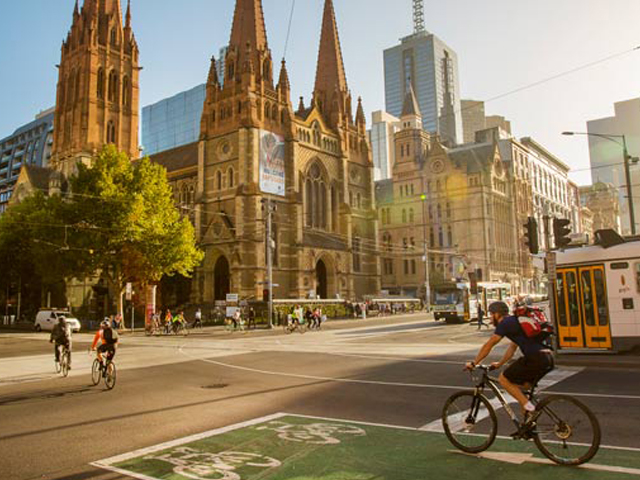
Central Melbourne currently dedicates 460 hectares of space to parking, with 57 percent of street space in the municipality taken up by roads, and four percent by street parking.
Council transport portfolio chairman, Nicolas Frances Gilley, argued that staggering population growth, coupled with increased congestion, means that major changes are needed.
“Our ambition is for a beautiful, liveable city where people can continue to enjoy all that Melbourne is famous for: our tree-lined streets, pedestrian thoroughfares and outdoor dining,” Gilley said. “We need to optimise our city streets for people walking, cycling and taking public transport, because that is how the majority of people move around and it’s the most efficient way to move large numbers of people as our population grows.
“We need to change the way we think about carparking and ask ourselves if private vehicle storage is the best use of our most important public spaces.”
The papers argue that spaces should be used for wider footpaths and bigger tram stops to more comfortably accommodate passenger increases. 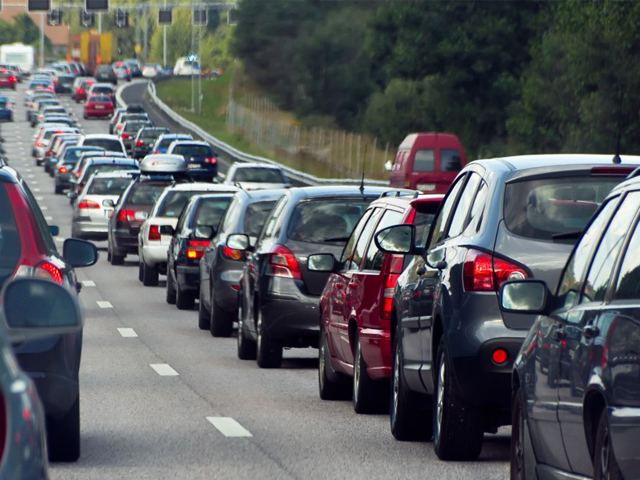
Another issue identified is the inequality of car usage as people on annual incomes of over $156,000 are more likely to drive to work but are also more likely to live in areas that offer extensive public transport services.
New York and London have recently decreased dependence on cars, after converting major road spaces to pedestrian zones and bicycle lanes in order to improve safety and decongest the city’s major arteries.
“Discouraging through traffic, providing high-quality alternatives to driving, and supporting vehicle sharing and carpooling could provide other solutions to reducing car dependence and congestion,” Gilley continued.
It also suggested that streets in the CBD grid be reduced to one lane each way, with the spare lanes being converted into space for cyclists, pedestrians and public transport users.
A draft Transport Strategy will be released later this year.