
Image: Jamie Davies via Unsplash
Alongside it, the government has also released the state's first-ever State Land Use Plan and a new Statewide Policy for Industrial Lands, rounding out what's being described as the biggest overhaul of the state's strategic planning system in decades.
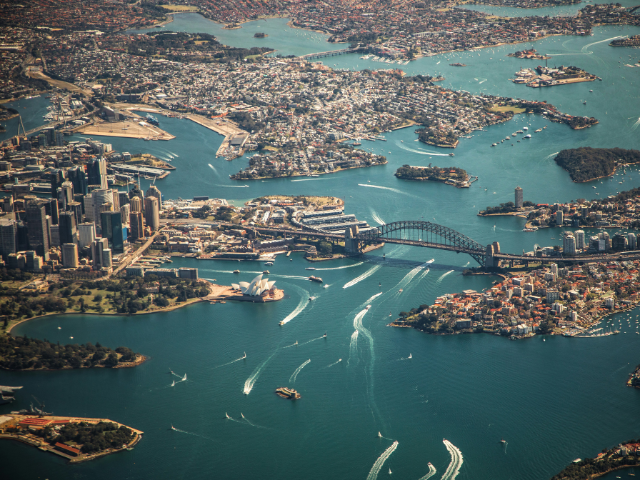
The Plan sets out how the NSW Government will address the growth, outlining a future for the region as it grows and develops. It outlines how state and local governments can use land use planning to respond to challenges, realise opportunities and outcomes for the region over the short, medium and long term.
More than 2000 submissions shaped the final Plan, following exhibition of the draft in late 2025, sharpening direction on where and what types of homes should be built.
The NSW Government media release reads, “For too long, housing supply and jobs growth have not kept pace with Sydney’s population, leaving communities without homes, transport, and services they need. The Sydney Plan brings these decisions together for the first time, so that growth, housing, and infrastructure are planned as one, not left to chance or dealt with in silos.”
According to the Plan, Sydney will need at least 800,000 more homes and 950,000 more jobs over the next 20 years. For the first time, job targets have been broken down by local government area, giving every part of the city a stake in future growth.
The Plan supports increased housing supply in the east, close to jobs, transport, and services, while accelerating economic growth across Western Sydney, underpinned by Western Sydney International Airport, the Aerotropolis, advanced industries, logistics and innovation precincts.
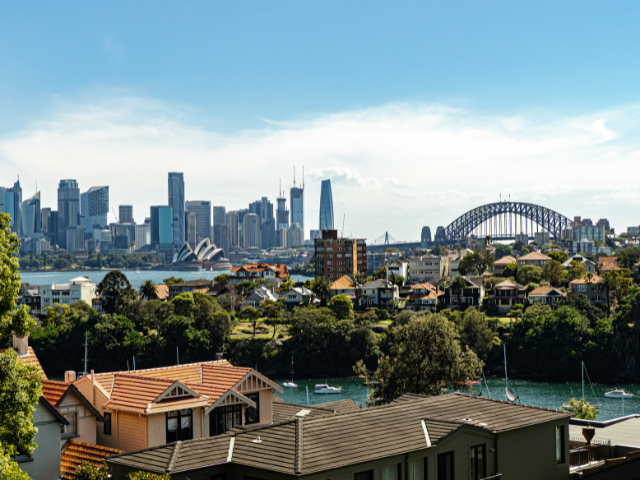
Image: Jesper van der Pol via Unsplash
The report compares Sydney’s current low density of 4,700 people per square kilometre with Barcelona at 19,600 and Singapore at 25,500. There does not seem to be a target Sydney is aiming for, but it is clearly going to be significantly higher. The big change to metropolitan Sydney’s character will be to see many more high- rise apartment towers in 30 centres along with mid-rise apartments nearby.
Councils will also be required to maintain at least 30 years of feasible housing capacity through their Local Environmental Plans, alongside a commitment to work with local government on updated five-year housing targets once the National Housing Accord concludes in 2029.
Open space hasn't been left out of the equation either. The plan identifies priority Blue-Green Grid corridors aimed at improving access to parks and waterways, with the first three set to be delivered over the next three years.
Minister for Planning and Public Spaces, Paul Scully said, “It recognises that different parts of Sydney have different strengths, supporting more housing in well-serviced areas while driving the next wave of economic growth in Western Sydney.”
State-wide organisations such as the Property Council of Australia and The Northern Sydney Regional Organisation of Councils (NSROC) have welcomed the plan.
Image: Laura Cros via Unsplash
“One of the most significant changes is the recognition that housing capacity only matters if it is feasible and deliverable. The commitment to maintain a long-term pipeline of feasible housing capacity and develop future housing targets beyond the current Housing Accord period is an important step forward and reflects the direction called for in our advocacy, said Katie Stevenson, NSW Executive Director, Property Council of Australia.
NSROC President and Willoughby City Council Mayor Tanya Taylor said, “Sydney’s planned housing growth needs to be supported by the infrastructure that allows those communities to function effectively, including the facilities needed to transfer, recover, process and ultimately manage the waste they generate.”
NSW STATE LAND USE PLAN
Alongside the Sydney Plan, the Minns Labor Government has released the State Land Use Plan, the first of its kind in NSW, which establishes a new three-tier strategic planning framework for the state. The State Land Use Plan will guide regional plans, which in turn will inform local strategic planning, creating a simpler and more consistent planning system that better aligns housing, jobs, infrastructure, and environmental outcomes across NSW. This means the right level of government will be doing the right level of planning.
Image: Pip Christie via Unsplash
STATEWIDE POLICY FOR INDUSTRIAL LANDS
In addition, the Statewide Policy for Industrial Lands will provide a more coordinated, evidence-based approach to planning and protecting the industrial land that supports local jobs and manufacturing. By identifying industrial lands of state, regional and local significance, it gives greater certainty to industry, councils and communities, and helps guide infrastructure investment where it is needed most.
Together these reforms represent the most significant overhaul of the state’s strategic planning framework in decades, providing a clear, more coordinated approach to managing growth and supporting future government investment and rezoning decisions for the state.
With the Sydney Plan, State Land Use Plan and Statewide Policy for Industrial Lands now finalised, the focus shifts to implementation. That means updated housing targets working through councils' Local Environmental Plans, the first Blue-Green Grid corridors moving into delivery over the next three years, and the framework guiding future rezoning and infrastructure investment decisions across the state.