
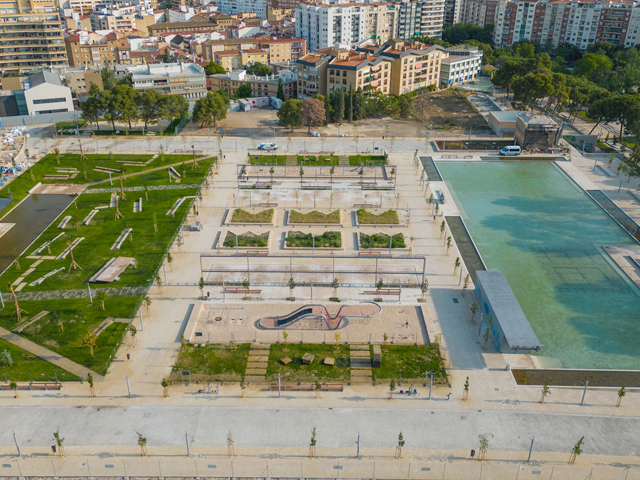
Text description provided by the architects. For more than a century, the Pignatelli Reservoirs were part of the system that supplied water to the south of Zaragoza from the Imperial Canal. Built in the late 19th century, the complex consisted of four large open reservoirs measuring 125 x 40 meters and 4 meters deep, capable of storing up to 80,000 m³ of water. Over time, these infrastructures fell into disuse, leaving a significant urban void next to the Pignatelli Park.
The project originated from a public competition called by the Zaragoza City Council to reclaim this space and integrate it into the fabric of the city by expanding the existing park. The proposal is based on a fundamental idea: to understand the site as a contemporary hydraulic system in which water, the origin of these infrastructures, once again becomes the structuring element of the landscape.
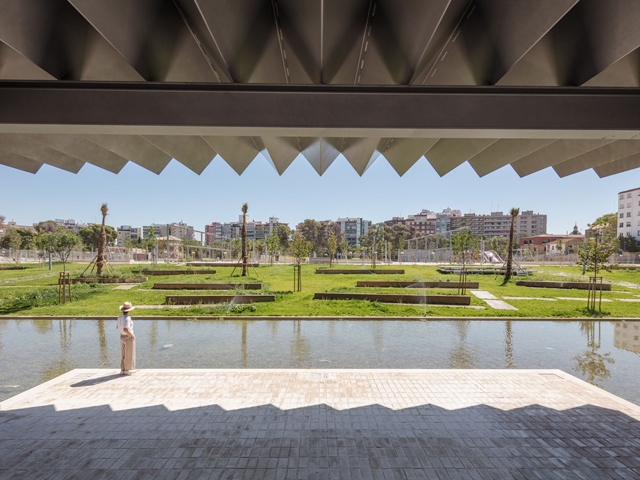
The outlines of the old reservoirs organize the park into three distinct areas that reinterpret the presence of water in various ways.
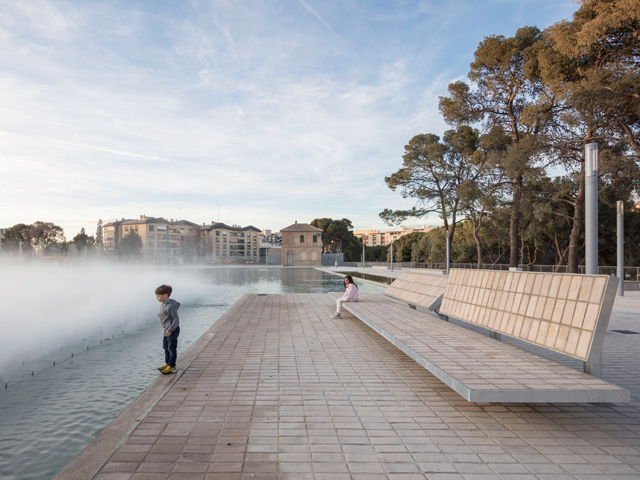
The first area transforms into a large urban pond measuring 99-by-41 meters. A navigable body of water occupies its central space, while inside, 800 nozzles create a mist of water that cools the environment and constructs a changing landscape. Platforms and small naturalized ponds with aquatic vegetation appear around the perimeter, enhancing the biodiversity of the park.
The second area adopts a more intimate and everyday scale. A garden organized in bands alternates between meadows, children's play areas, hand-made brick paths, and a central plaza with integrated water fountains in the pavement. A grid of deciduous trees and metal structures for climbing plants provide shade and create various gathering spaces.
The third reservoir becomes a botanical amphitheater where the sculpted topography creates an outdoor stage space. At the lowest point, a pond with aquatic vegetation appears beneath a platform that seems to float, protected by a large cantilevered metal canopy.
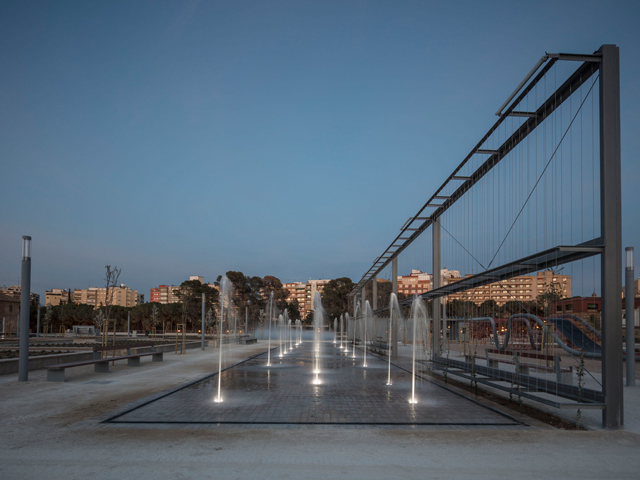
A network of longitudinal and transverse pathways articulates the park using pavements made from local materials and sustainable drainage systems that allow rainwater to infiltrate the ground.
The intervention thus transforms an old hydraulic infrastructure into a new public landscape where water, vegetation, and urban activity intertwine, keeping the memory of the place alive.
PIGNATELLI RESERVOIRS
LOCATION Zaragoza, Spain
ARCHITECT Héctor Fernández Elorza
PHOTOGRAPHY Montse Zamorano