
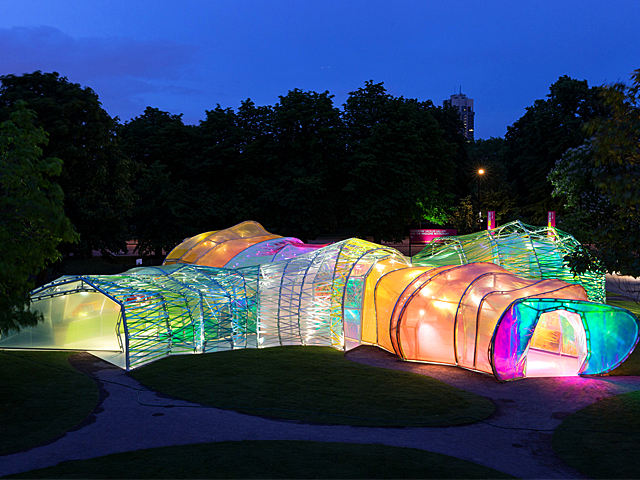
Image © Iwan Baan
The 2015 Serpentine Pavilion, designed by SelgasCano, is to be relocated to Los Angeles. Organised by Second Home – a London-based social business supporting creativity in cities – and the Natural History Museums of Los Angeles County (NHMLAC), the initiative will use the structure as a flexible, multi-purpose social space hosting programs intersecting art, design, science and nature. 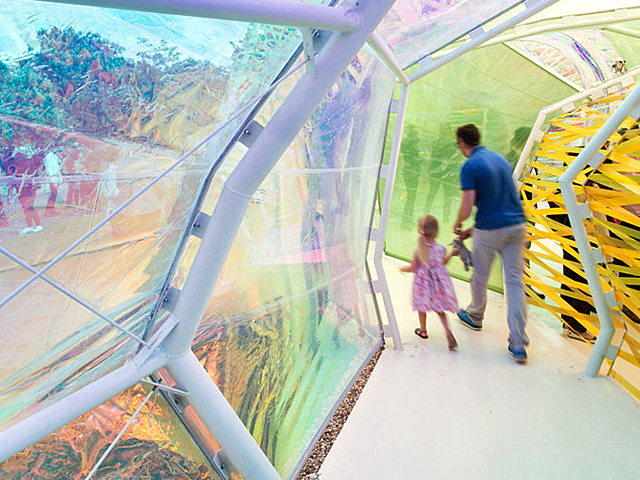
Image © Laurian Ghinitoiu
From June 28 to November 24, 2019, the pavilion will be located at La Brea Tar Pits, the only active urban Ice Age excavation site in the world, becoming the first Serpentine Pavilion to be presented in the United States. The 80-square-metre pavilion will be set on the grassy ellipse of the part adjacent to the museum at the Pit. There, it will host a diverse program of public talks, film screenings, and other events, all free and open to the public. 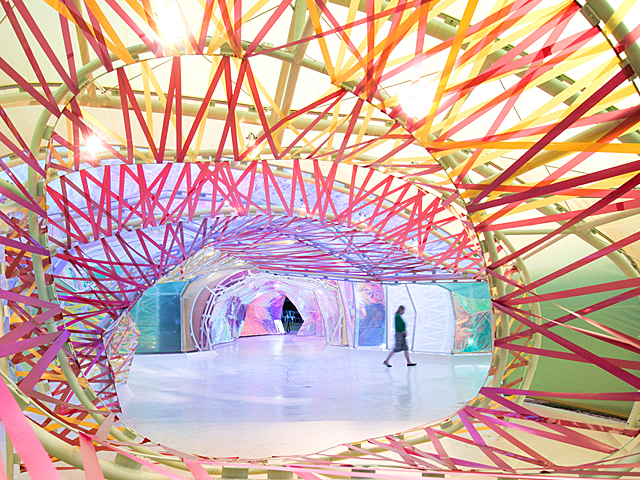
Image © Laurian Ghinitoiu
“We are pleased to be working with Second Home to bring the Pavilion to Los Angeles and to one of L.A.’s most compelling public and scientific resources, La Brea Tar Pits,” said Dr Lori Bettison-Varga, NHMLAC President and Director. “The Pavilion is an opportunity to experience one of the boldest and most innovative designs in contemporary architecture, but it’s also a place for people to meet and be inspired by a range of activities throughout the summer. It gives a glimpse of what we can do with cultural programming at our museums, at that space where art and science intersect.” 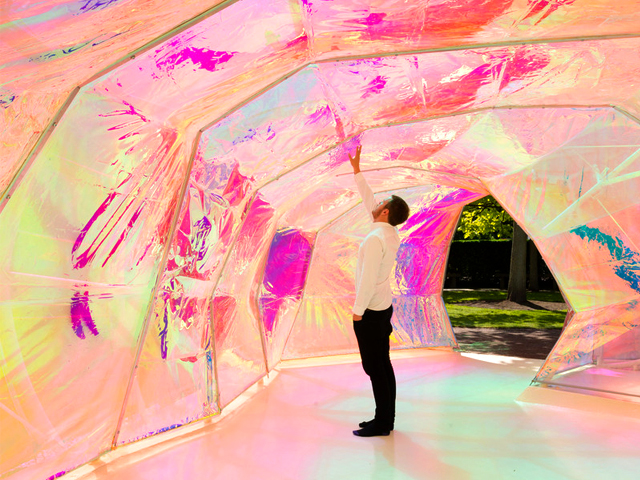
Image © Jim Stephenson
Designed by Madrid-based architects SelgasCano, the 2015 Serpentine Pavilion was noted for its bold use of colour and play. Consisting of a minimal steel frame wrapped in multi-coloured ETFE sheets and webbing, the design is encompassed by ‘secret corridors’, which provide access to the main internal space, inspired by the multi-layered and sometimes chaotic network of the London underground. 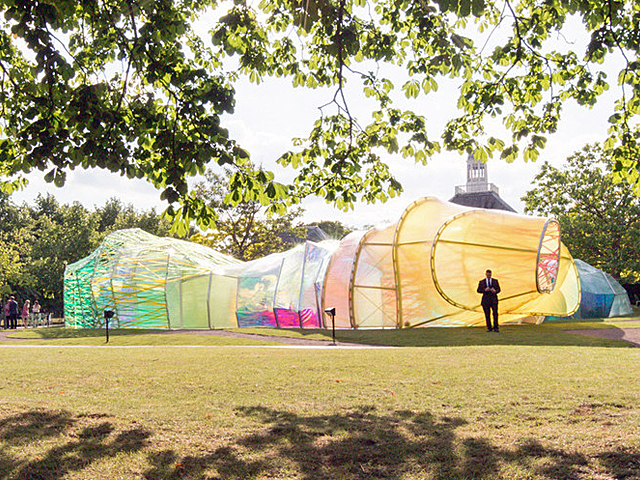
Image © Laurian Ghinitoiu
Known for their work with synthetic materials, SelgasCano's use of coloured ETFE provides the structure with "movement and lightness", as the plastic is able to deflect a little within the rigid steel frame – offering a dynamic and almost fragile alternative to our usual expectations of enclosure.
Working with engineers Aecom and David Glover, the ETFE used was printed in 19 colours to achieve the kaleidoscopic design of the architects.
Via ArchDaily