
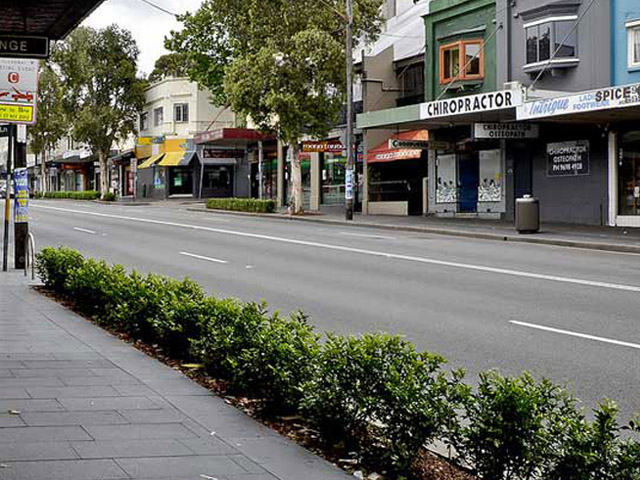
Recently a paper published in the Atmospheric Environment journal has found that while tall established trees are good at absorbing pollution in open areas, hedges are able to better trap pollution and toxins at lower height levels. Meaning, hedges are able to capture pollution at exhaust pipe level.
It is reported that the low leaf-level and tight-knit foliage of many hedge varieties make them excellent catchers of dust and now pollution. Yet, while there is no official word on which varieties are best for trapping pollution, lead Professor of the research team, Dr. Prashant Kumar, has urged councils, landscapers and city planners to consider committing more to incorporating hedges in our urban environments.
When interviewed by the BBC News team, Dr. Kumar, of Surrey University, explained: “The big thing about hedges is that they are right down at tailpipe level.” 
“The emissions from vehicles starts to dilute very quickly as you move away from the road- so any hedge that acts as a barrier slowing down the airflow and catching pollutants on the leaves is going to offer… better protections”.
While many cities enjoy the environmental benefits of large tree lined streets, as high density living increasingly becomes the norm, perhaps it is time to rethink our choices of urban plant varieties.