
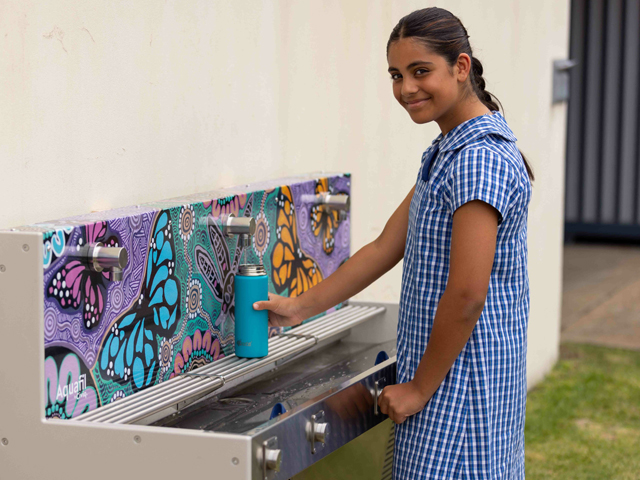
For First Nations peoples, water is much more than infrastructure. It’s life, culture, and Lore. National Reconciliation Week 2026 runs from 27 May to 3 June. This year’s theme, All In, is a call for every Australian to make reconciliation part of daily life.
That’s why a drinking water station is the perfect place for Aboriginal art. Not because it’s clever branding. It’s because water and Country are inseparable. A water station is one of those rare places in a school or community that everyone returns to, day after day. It’s where people stop, chat, refill, and connect with the same story every time. In that way, a station can do more than just keep people hydrated. It can put Culture front and centre.
DRINK FROM A STORY, EVERY DAY
Posters come down. Campaign weeks finish. But a fountain stays. That is why Aboriginal art works so well in this space. It’s not off to the side. It becomes part of daily life. Every refill is a chance to connect with story, colour, Country and community.
That’s the thinking behind Civiq's Aboriginal art program, featuring Luke Penrith’s exclusive collection for Aquafil product range. Luke Penrith is a proud artist of Wiradjuri, Wotjobaluk, Yuin, and Gumbaynggirr heritage, and his collection for Civiq is titled Connections and Journeys. Each of the six pieces explores a unique relationship between people, place and water:
- Plains and Fresh Water speaks to inland waterways and freshwater communities
- Saltwater & The Coastline follows coastal journeys and sea Country
- Hills & Valleys honours connection to mountain Country
- Connections, Native Bees, and Butterflies highlight interdependence, care for water, pollination, and the life water sustains
Luke doesn’t call this work decoration. For him, it’s about connection, care and learning.
“I hope these artworks encourage students to embrace healthy habits and make sustainable choices. I’m proud of my heritage, the stories my family carry like precious jewels. My art’s about bridges, not walls. It’s about sharing that beauty and teaching about the ancient rhythms of the land," he explains.
Here is the real shift: making culture, care for Country, and community visible in daily life. Modern drinking water stations support healthy hydration and reduce single-use plastic waste. By protecting waterways and minimising plastic pollution, these stations also honour a central Aboriginal value: caring for the environment as an ongoing responsibility to future generations. They carry cultural learning and community pride, every day, right where people already gather.
WHAT "ALL IN" LOOKS LIKE IN A SCHOOL
Berala Public School shows exactly how this works in practice. They upgraded their drinking water access with a mix of Hydrobank, Solo, and Hydrofil stations, each featuring Aboriginal art.
The goal was simple: make drinking water more attractive. The result was much more than just a functional upgrade. The stations gave students easy access to bottle refills, put Aboriginal art and culture on display, and quickly became a favourite spot at recess. A drinking water station isn’t hidden in a staff room or stuck high on a wall where no one sees it. Students use it every day. When Aboriginal art is part of the station, the story stays in front of them. It becomes part of the school’s daily rhythm, not just a one-off activity. Some schools choose Luke Penrith’s exclusive collection. Others go further, working with local Aboriginal artists to create custom panels that reflect their own Country, language group, and community identity.
WHAT "ALL IN" LOOKS LIKE IN A COMMUNITY
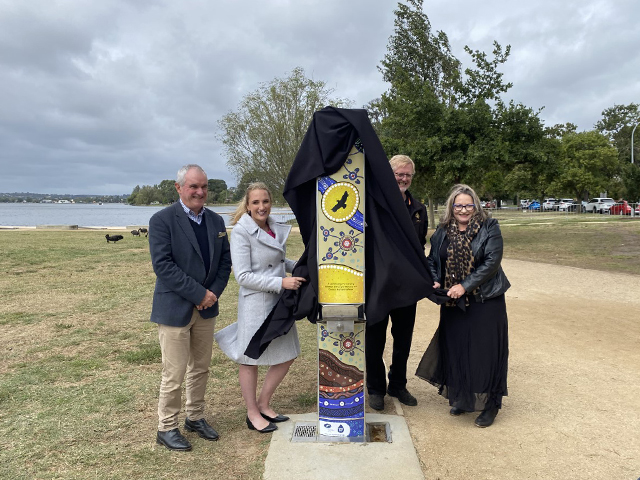
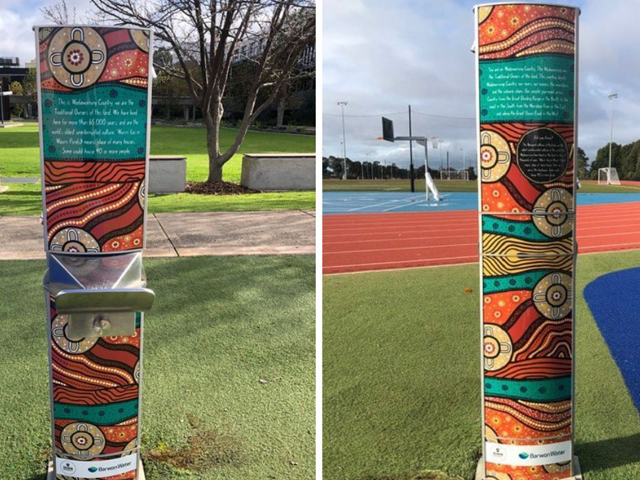
The same principles apply beyond schools. In places like Ballarat and the Central Highlands, artwork by Wadawurrung Traditional Owner Billy-Jay O’Toole turns FlexiFountain installations into permanent markers of community and reconciliation. At Deakin University, cultural water stations transform an everyday action into a moment for learning and connection.
These installations aren’t just temporary gestures. They create a lasting, visible presence: something people return to and interact with daily, long after campaign weeks have finished. Unlike a poster or a plaque, these fountains become woven into the community's routines. This is what long-term commitment to reconciliation looks like.
The 2026 theme, All In, calls for action that endures, and these water stations are a practical answer. They make reconciliation tangible: present in daily life, visible in public space and accessible to everyone. Whether it’s a busy Saturday on the oval, the first day of a new school term, or a casual refill by a passerby, these stations continue to spark curiosity and conversation. Culture isn’t an add-on; it’s part of the everyday landscape.
Visit Civiq via the links below to learn more