
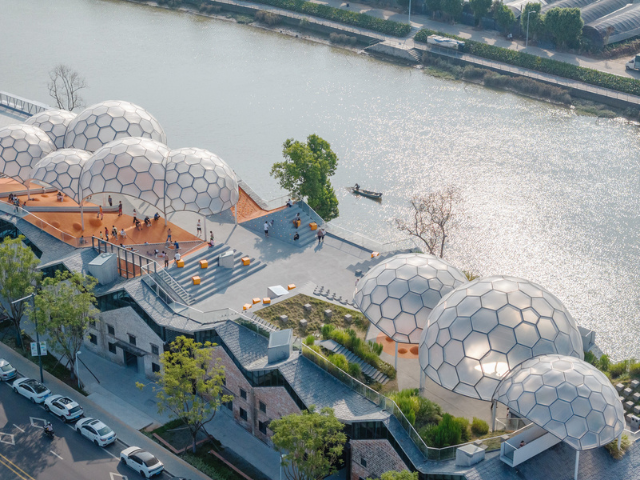
A shade structure designed to look like a wisp of cloud has turned the roofs of a line of waterfront warehouses in China into a community park that can be enjoyed all year long. The transluscent fibre allows for sunshine and views to be enjoyed no matter where you are.
Text description provided by the architects. Dali in Nanhai District, a former industrial town in the Pearl River Delta, is transforming into a livable urban environment by unlocking public spaces within its dense fabric. Located along the Huadi River, this project revitalizes the derelict Yongping Warehouses. Once a vital node for regional river trade, these structures occupy the city's most valuable waterfront.
As Dali's first waterfront revitalization, the project features an iconic installation inspired by a white cloud rising from the warehouse roofs. Acting as both landscape and public art, this "wisp of cloud" serves as a daily leisure space and a beacon for the town's broader public space network.
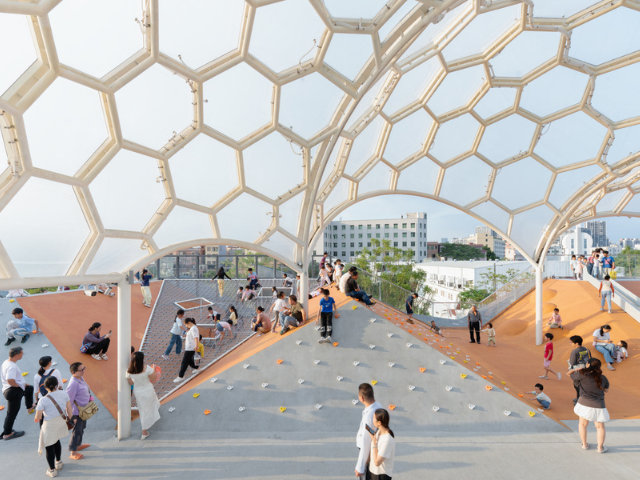
Due to the site's narrow footprint, the park is elevated to the rooftop, dedicating the full warehouse volumes below to commercial use. This vertical stacking ensures financial self-sufficiency while maximizing the waterfront realm. Both public recreation and commercial activities gain full riverside views, rethinking the traditional binary between "park" and "commerce."
Though architecturally undistinguished, the old brick-and-wood warehouses embody the unpretentious construction history of their era. Deliberate trade-offs were made during renovation: original wooden roof trusses and tiles were replaced with a rooftop park, which allowed for higher interior commercial ceilings. Conversely, the historic masonry facades were preserved over the use of transparent commercial glass. Old and new converge at the eaves, where original walls overlap with new climbing trellises.
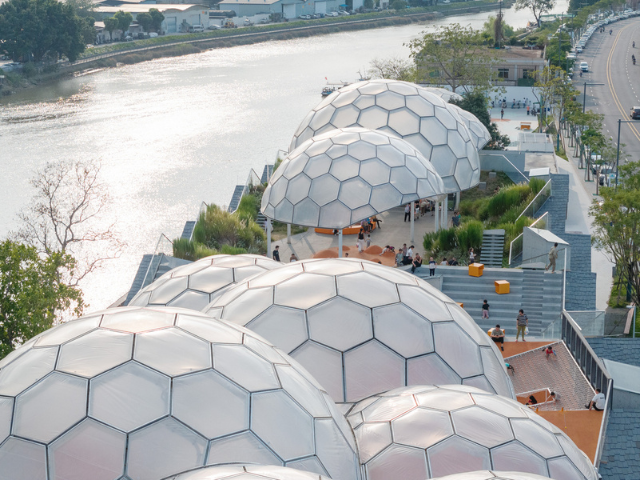
Stripping the roofs to their abstract slopes inspired an "uneven" park featuring grassy slopes, steps, interactive walls, and rope nets. This undulation allows visitors to intimately engage with pitched roof forms that were traditionally only admired from afar. To honor the site's memory, construction waste was repurposed: reclaimed stone forms riverside gabion railings, and old wooden purlins serve as display installations. Modern materials like exposed concrete and metal create a visual dialogue with the historic bricks.
Furthermore, original passages between the warehouses were preserved as an elevated circulation system. These "blood vessels" open visual corridors, enable cross-ventilation, and connect the rooftop, commercial spaces, and waterfront. A hidden mechanical floor beneath the roof systematizes equipment layout and ensures a clean aesthetic in public spaces.
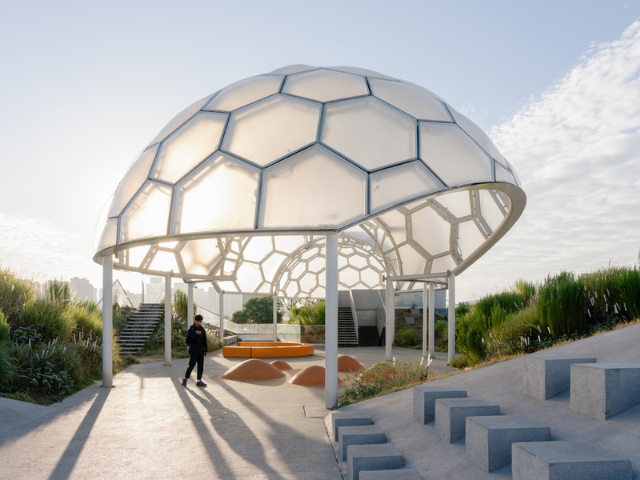
Named "Yat Gau Wan" (Cantonese for "a wisp of cloud"), the adaptive reuse project has become a vibrant landmark in the Guangzhou-Foshan border area. Evolving from industrial warehouses, it blends seamlessly into the new urban fabric, hosting a dynamic public life where residents and visitors interact against a historic industrial backdrop.
YONGPING WAREHOUSES
LOCATION Foshan, China
ARCHITECT Atelier cnS
PHOTOGRAPHY Siming Wu